
Sprache | Language | בחירת שפה
The Kohn family
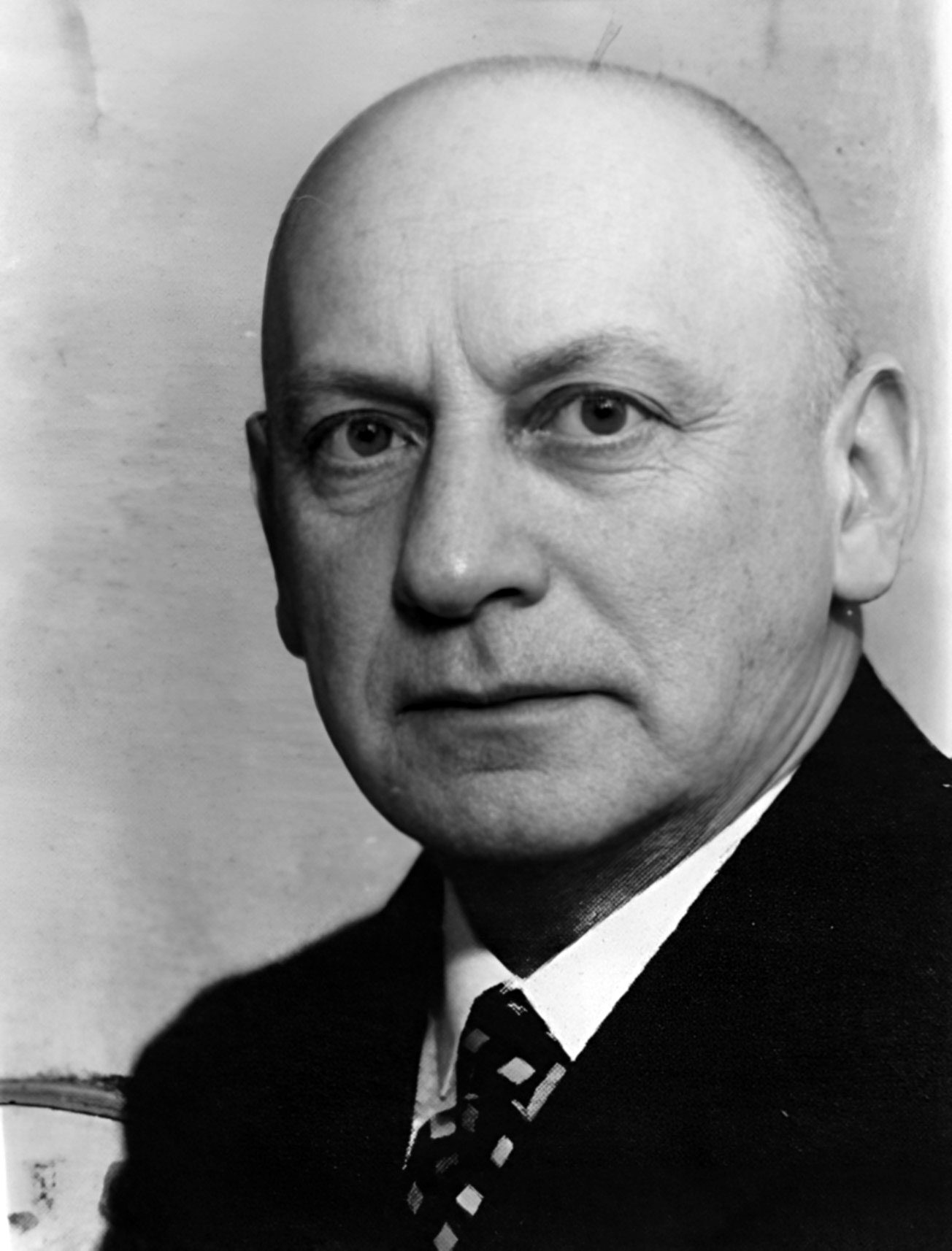
Since 2022, this square has borne the name of Ilse Kohn, a Jewish woman born in Coburg in 1906. Her parents, originally from Bohemia, came to the town in 1901. Her father, Siegfried Kohn, opened a drapery and fashion goods shop. The company quickly became well established in Coburg’s business community and by 1909 Siegfried Kohn was already able to relocate to new premises on the left-hand side of Mohrenstraße 36. Around the same time, he also started a family. In addition to his daughter Ilse, two more children were born, both of whom died at a young age. During the First World War, the family demonstrated compassion and solidarity by donating bed linen, shirting fabric and wool to the Red Cross. They also donated goods to the poor and needy.
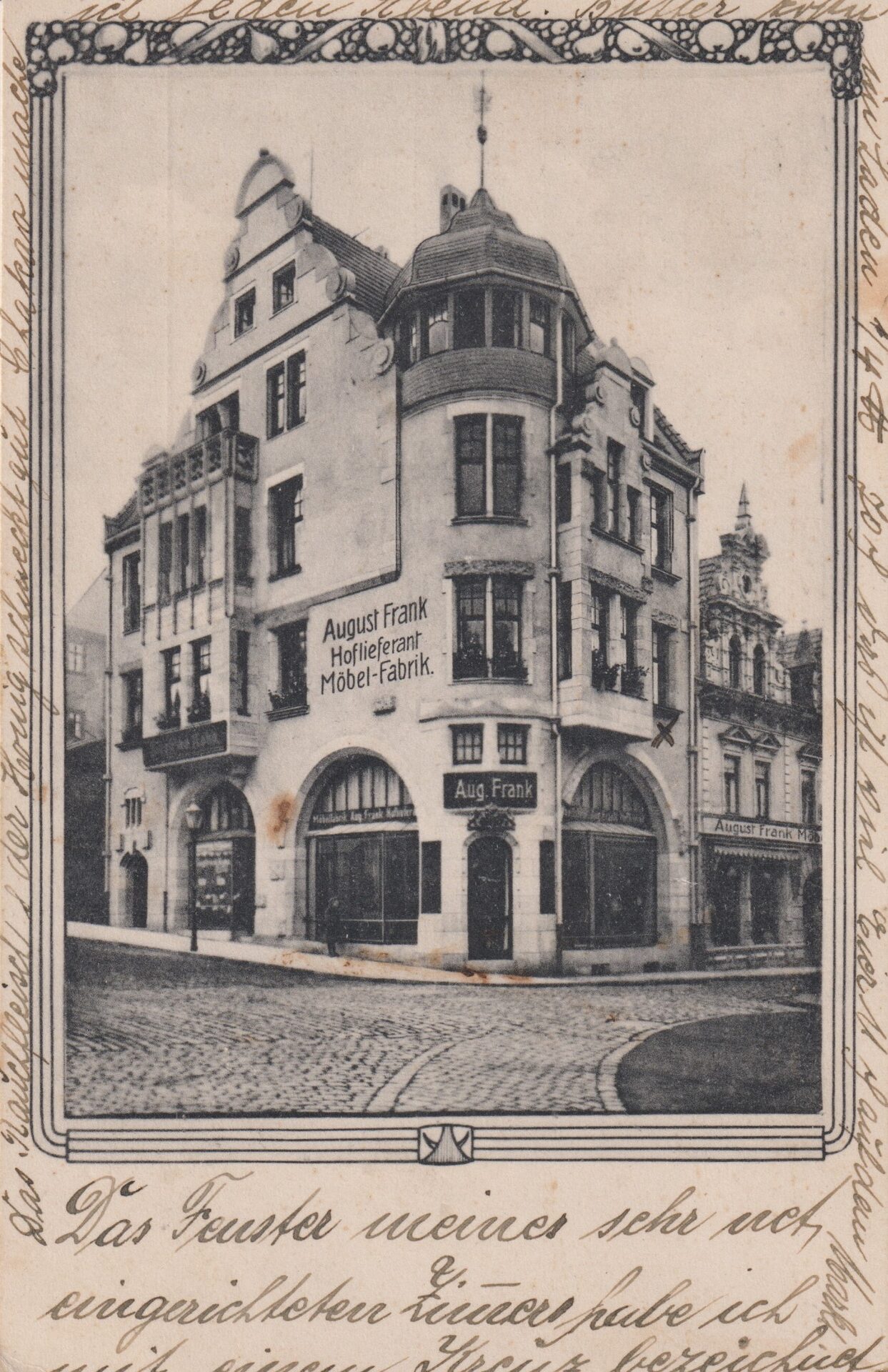
After the Nazis came to power, life for the Kohn family changed abruptly and brutally. Siegfried Kohn became a target of the new regime in March 1933. He was taken into so-called “protective custody” by Sturmabteilung (SA) members acting as “emergency policemen” and was brought to the notorious “Prügelstube” (beating parlour), where he was severely battered at least once. At the same time, the Nazis called for a boycott of his business. Although he reopened his business after his release, fewer and fewer customers came. The few who still came often refused to pay for their purchases, leading to outstanding debts of more than 7,000 Reichsmarks.

Amidst these oppressive circumstances, Ilse Kohn left Coburg. In 1934, she married a Dutchman named Moses Pool and moved with him to Amsterdam. However, she found no lasting happiness there either. The marriage failed and they divorced in 1937. Ilse reverted to her maiden name and became a housekeeper and landlady. However, even in the Netherlands, the horrors of the Nazi regime caught up with her after the German Wehrmacht occupied the country in 1940. Without the financial means to escape, she again became a victim of the antisemitic persecution from which she had once fled.
In 1938, the family suffered another devastating blow: Ilse’s father was stabbed to death in his shop, probably by a fanatical antisemite. The perpetrator was never brought to justice. Deeply affected by this horrific act, Ilse’s mother Hermine Kohn closed the business. A party-loyal tradesman took over the remaining stock. In April 1942, Hermine was deported to the Kraśniczyn ghetto near Lublin, where her trail goes cold. Ilse Kohn was interned in the Westerbork transit camp, at the end of July 1942, and then deported to the Auschwitz concentration camp on transport train “T 27-7-42.” One month later, she was murdered there.
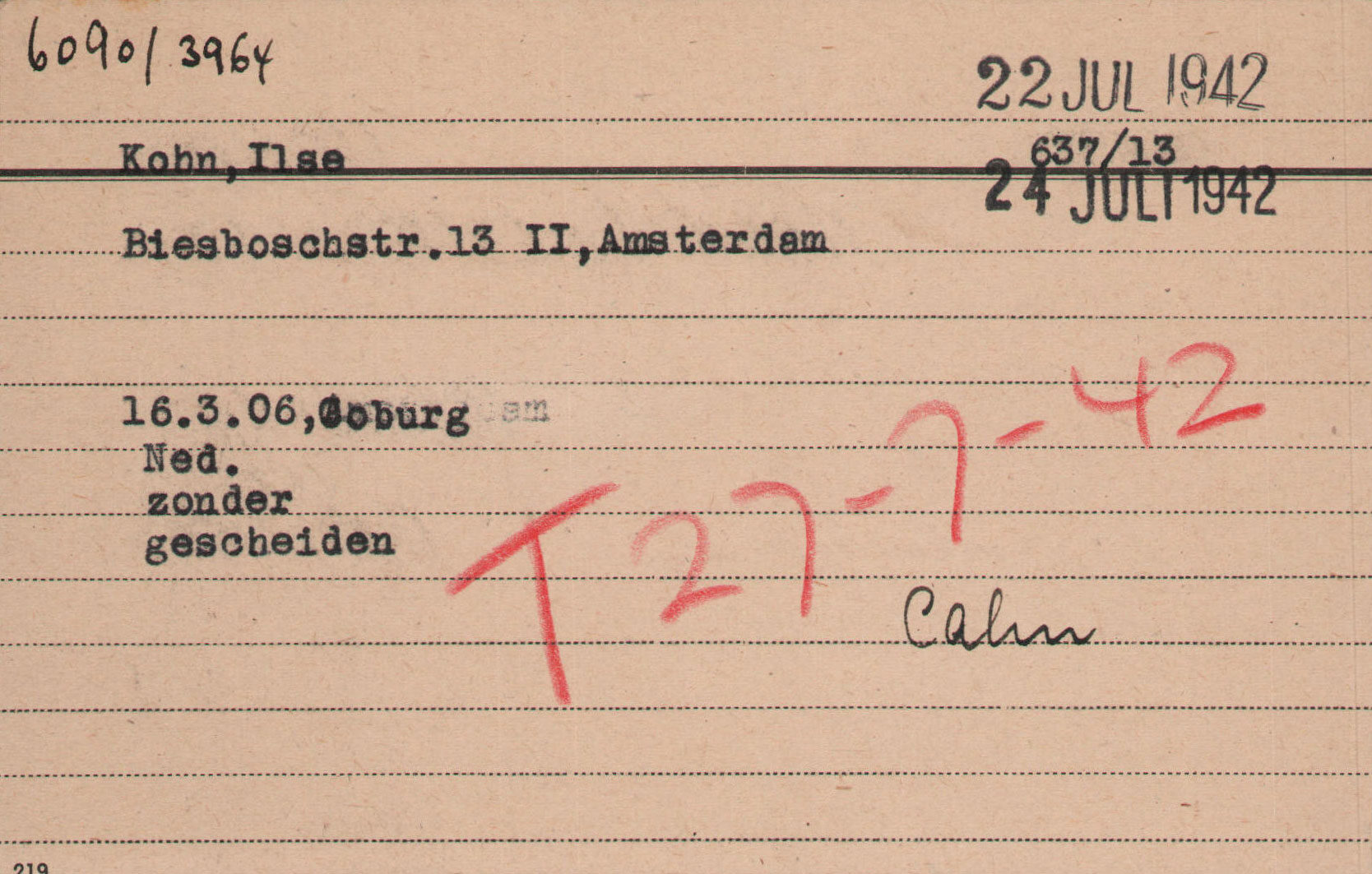
The square was named in commemoration of her tragic fate, but the name Ilse Kohn also represents the fate of her parents and of all other Jews from Coburg who were murdered by the Nazi regime.
Physicians
Jews in Germany had been permitted to study medicine since the late 17th century. As a result, the number of Jewish doctors steadily increased, particularly in larger cities. As early as 1756, a Jewish hospital was established in Berlin. During the Age of Enlightenment, physicians were considered part of the Jewish intellectual elite. It was only in 1866 that the first Jewish medical practitioner, dentist Hermann Simon, settled in Coburg. After 1900, a further seven Jewish doctors followed and opened their own practices. Most of them set up in the prestigious areas near the station or along Mohrenstraße. From 1909, the Jewish doctor Franz Colmers was also the director of Coburg’s hospital, the predecessor of today's clinic. He held this position for 15 years.
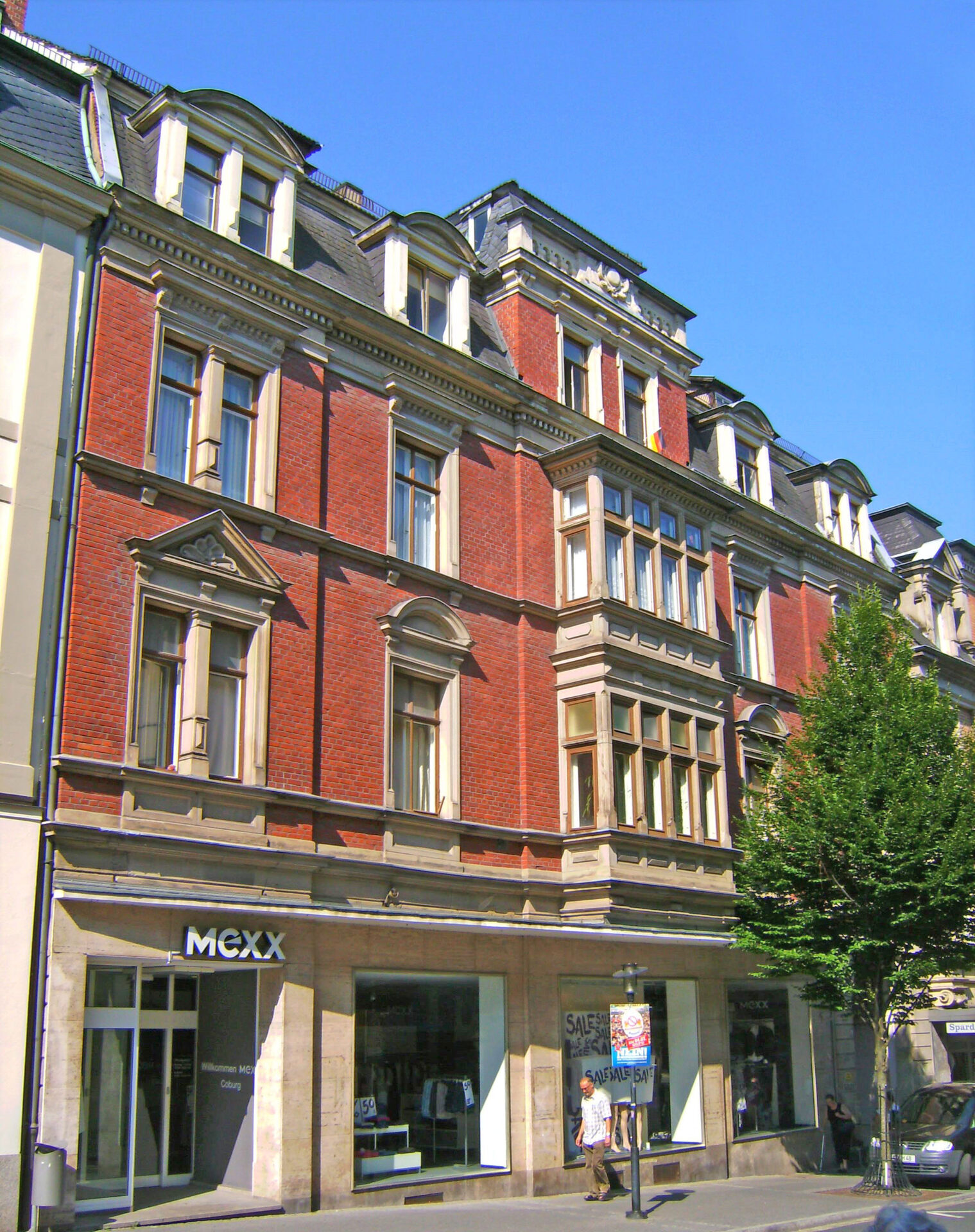
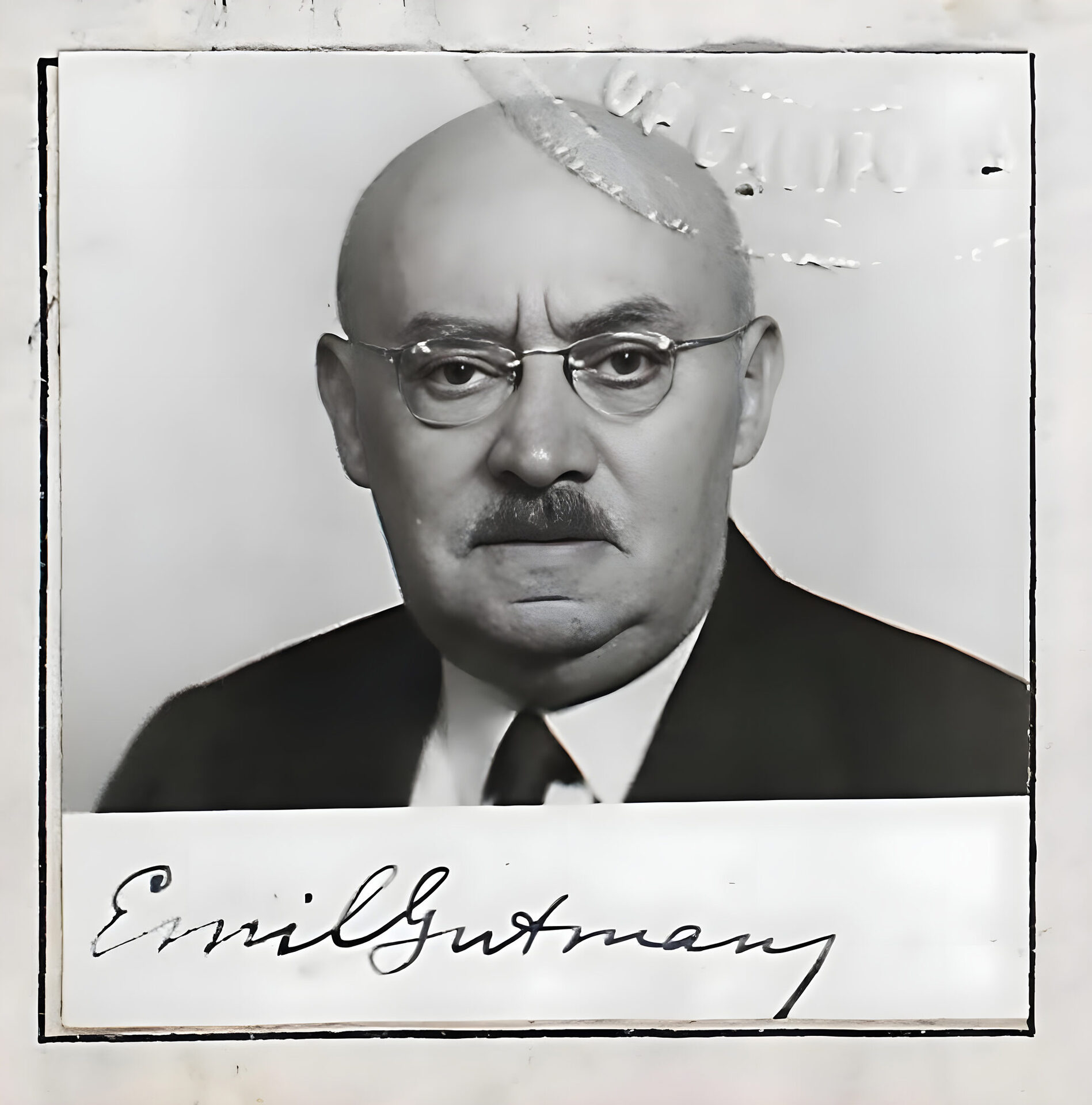
Coburg-born Dr Emil Gutmann opened a specialist practice for orthopaedics and surgery at Mohrenstraße 32 (the third house on the left-hand side) in 1905. During the First World War, he served as a medical officer at military hospitals in Bamberg and Würzburg. During the Weimar Republic, Gutmann expanded his practice into a specialised orthopaedic clinic. He earned an excellent reputation and was active as an accident physician and medical expert. He also published articles in professional journals. His daughters, Helene and Margarethe, also both aspired to careers in the medical field.
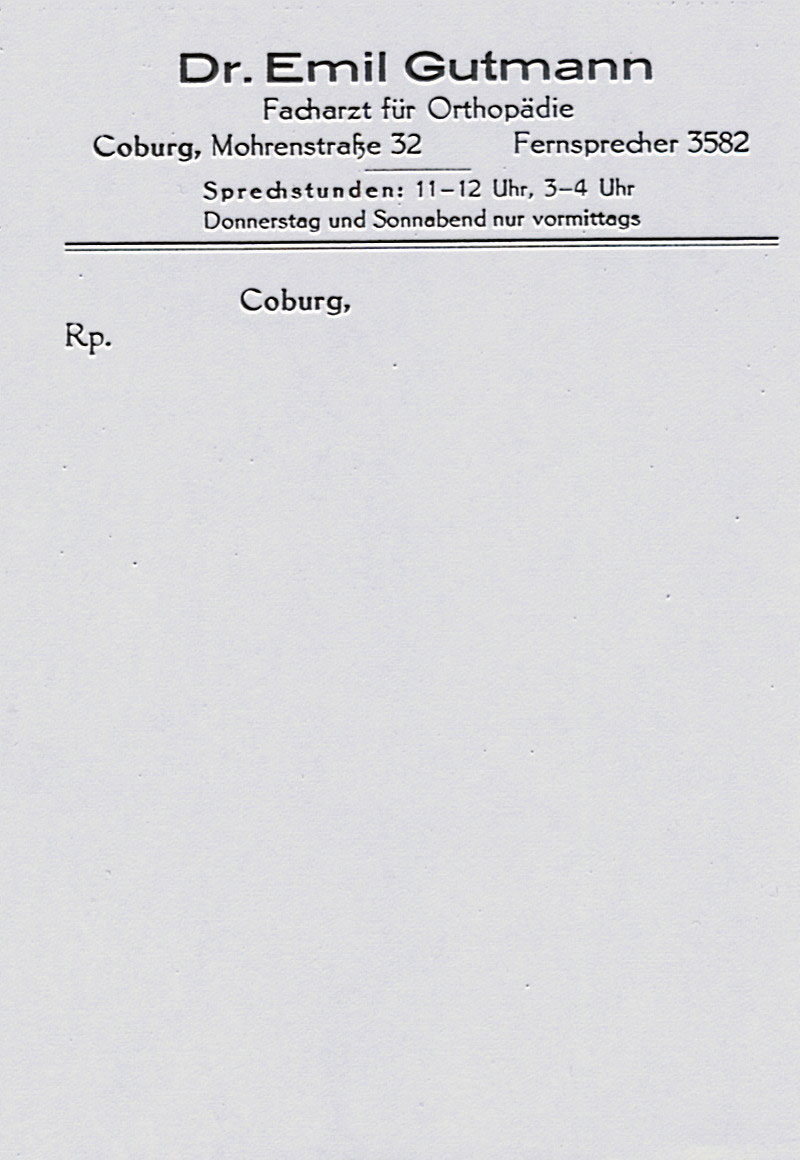
When Hitler came to power, the family’s situation changed dramatically. As early as 1933, Gutmann, like all Jewish doctors, lost his licence to treat patients with public health insurance. From that point on, he was only allowed to treat Jews and privately insured patients. His daughters were barred from pursuing their chosen professions and therefore left the country. In 1938, Jewish doctors and, a year later, dentists and vets were banned from practising medicine by the IV. and VIII. Regulation to the Reich Citizenship Law. From then on, Jewish physicians were no longer allowed to call themselves doctors. Some continued to practise as “Krankenbehandler” (health attendants), thereby ensuring the ongoing medical care of the Jewish population. Many, however, took their own lives or – like Emil Gutmann – left Germany.
In October 1941, he and his wife fled to Cuba. From there, he emigrated to the United States in 1943. Emil Gutmann died in Hollywood in 1956. After four other Jewish doctors had previously managed to escape from Coburg, the Gutmanns were the last Jews to flee the town before deportations began. The last Jewish physician in Coburg, Dr Moritz Cramer, was deported at the end of November 1941 to the Riga-Jungfernhof camp, where he is believed to have been murdered.
Next station
Jewish cattle dealers like Siegfried Stern shaped Coburg’s trade. In 1935, licenses were revoked. Stern fled to the U.S., where he died in exile in 1945.
About the Path of remembrance
The memorial path “Jewish Life in Coburg” commemorates the city’s Jewish community in 14 stations. These stations trace the history from the community’s integration into Coburg’s civic life in the mid-19th century to its annihilation following the early seizure of power by the National Socialists.
Jewish citizens were an integral part of Coburg’s community for decades. Under National Socialism, the Jewish community and its members were eradicated. They had to flee or were murdered. It is our responsibility to keep the memory of their contributions and suffering alive in the town of Coburg.
In 2023 the Coburg town council decided to commemorate Jewish life in Coburg with a memorial path through the town. The memorial path was officially inaugurated on 31 July 2025.